

Building a remote-first team is no longer a trend. It’s now the operating system behind some of the fastest-growing agencies and SaaS companies in the world.
But as agencies shift away from in-office teams, one concern comes up repeatedly:
“How do I stay in control of operations when my team is fully remote?”
The answer isn’t more oversight.
It’s more structured.
Remote-first teams become stronger, faster, and more predictable than traditional teams when they’re built intentionally. This is the system we’ve implemented at RepStack as we grew past 300 team members, and the same model we help agencies adopt today.
Why Remote-First Works (When Done Right)
Remote-first isn’t about saving money or ditching the office. Those are byproducts.
The real advantage is structural.
Remote-first gives you access to:
- Global, specialized talent
- Lower, controlled payroll
- Stronger retention
- Higher operational consistency
- Founder freedom
But these benefits only show up when you build the team with clarity not improvisation.
The Problem Most Agencies Ignore
Most founders don’t struggle because they’re remote. They struggle because they’re overloaded.
You start doing everything yourself:
client communication, reporting, fulfillment check-ins, project management, hiring, finance
and suddenly the business feels heavier than when you started.
This is not a remote work problem.
This is a role alignment problem.
When the wrong people own the wrong tasks, remote or not, you’ll lose operational control.
Step 1: Start with a Time & Energy Audit
Before fixing operations, you need to understand what’s actually consuming your time.
A simple Time & Energy Audit reveals:
- which tasks drain your energy
- which tasks you shouldn’t be doing
- which tasks must be eliminated, automated, or delegated
Nearly every founder we work with discovers the same truth:
They’re doing work a trained support specialist can handle better, faster, and at a fraction of their hourly value.
Operational control begins with clarity.
Step 2: Adopt Revenue-Based Hiring
This is the biggest shift agencies must make:
Stop hiring randomly. Start hiring in alignment with your MRR.
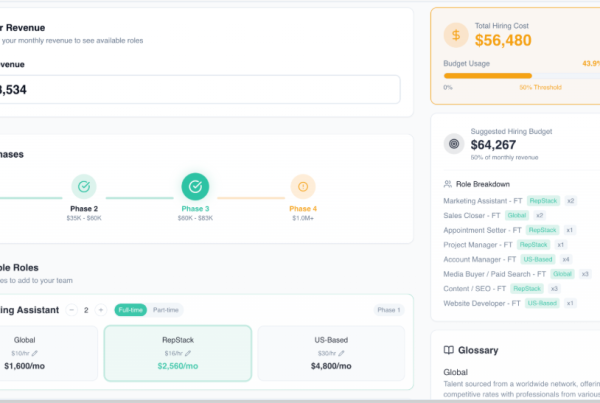
Here’s the predictable pattern we’ve seen from hundreds of agencies scaling to 7-figures:
- $20–35K MRR: Executive Assistant + fulfillment support
- $35–60K MRR: SDR + Account Manager
- $60–80K MRR: Sales Closer + Ops Support
- $100K+ MRR: Leadership roles and departmental structure
This is how you avoid payroll bloat and ensure every hire moves you closer to your next revenue milestone.
Step 3: Build Role Clarity Through Custom Blueprints
Remote teams need clear ownership, not more meetings.
For every role, you need:
- defined KPIs
- communication cadence
- task accountability
- tech stack alignment
- measurable expectations
This eliminates confusion and gives people what they need most:
a clear lane to operate in.
This is why RepStack builds a custom role blueprint before placing any Account Manager, SDR, Media Buyer, SEO specialist, GHL Admin, or EA.
Step 4: Keep Compliance and Payroll Under Control
One of the biggest barriers to going remote-first is fear:
“Is this legal? How do I pay them? Do I need an entity?”
This is where a proper Employer-of-Record (EOR) partner removes the risk.
With EOR support, you get:
- compliant hiring
- payroll and taxes handled
- HR structure
- benefits administration
- global hiring without legal entities
This is how you hire worldwide without losing operational control.
Step 5: Support, Train, Repeat
A remote-first team performs best when they’re not left on an island.
Every RepStack associate receives:
- training before placement
- certification in platforms like GoHighLevel, Meta Ads, HubSpot
- coaching and support
- a performance environment
- accountability to clear metrics
This creates consistent output no matter where in the world the team is located.
The Real Advantage of Remote-First
When implemented correctly, a remote-first team gives you:
- predictable delivery
- consistent client experience
- better retention
- controlled payroll
- more founder capacity
- higher margins
- access to top global talent
Remote-first is not the risk.
Lack of structure is.
Final Thoughts
I’ve built RepStack from 1 person in Calgary to 300+ team members across the globe all remote-first.
And what I’ve learned is simple:
Control doesn’t come from being in the same office.
Control comes from clarity, alignment, and the right people in the right roles.
If you’re ready to build a remote-first team that supports your growth and does not slow it down my team can help.
Book a Discovery Call to get your 2026 Hiring Blueprint.