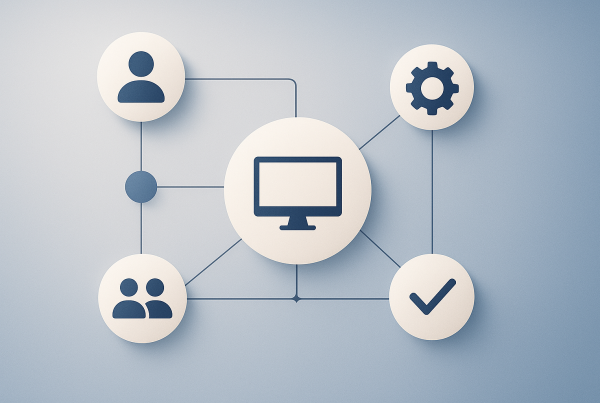


As agencies navigate digital marketing, the right tools can make all the difference. Marketing automation shields businesses from manual data collection missteps and fosters growth through efficiency. Platforms like Airtable reshape how agencies interact with information, turning data into insights and enabling personalized communication at scale.
Key Takeaways
- Marketing Automation Tools Streamline Processes for Strategic Growth
- Tools Like Salesforce Improve Email Engagement and Social Media Performance
- Regular Training Enhances Team Productivity With Marketing Software
- Automation Challenges Require Balance to Maintain Personalised Customer Interactions
- Continuous Testing and Update Adoption Are Critical for Effective Marketing Automation
Unlocking the Potential of Marketing Automation for Growth

Marketing automation tools are vital for managing projects and streamlining agency processes. They connect daily tasks to long-term growth through features like autoresponders and LinkedIn automation. Agencies use free email automation tools for cost efficiency and scalability. Beyond making tasks easier, these tools help turn insights into actions and goals into achievements. Successful businesses link these tools to clear KPIs for tangible success, offering a roadmap for navigating automation.
Identifying Key Functionalities in Marketing Automation Tools
Enterprise software has evolved significantly, introducing drag-and-drop design for complex marketing campaigns. Email marketing automation is at the forefront, enabling targeted communication to nurture leads efficiently. Integrated knowledge bases within these tools provide teams with instant insights, while platforms like Worksoft facilitate these advanced systems’ smooth operation and testing.
Aligning Tool Capabilities With Strategic Growth Goals
By integrating automation tools like Mailchimp for personalized email campaigns, testing landing pages for improved user experiences, and leveraging LinkedIn for B2B outreach, businesses align with their strategic goals to significantly boost growth and scalability.
Analyzing Success Stories of Marketing Automation in Action
It is fascinating to observe businesses leverage technology for a competitive edge. A notable example is a medium-sized retailer that embraced web analytics and automation to tailor its marketing, significantly boosting its return on investment. By fine-tuning its approach and staying updated with the latest terms of service from platforms and browsers like Microsoft Edge, it ensured smooth user experiences, leading to considerable growth.
Setting Realistic Expectations and KPIs for Automation Initiatives
Establishing clear expectations and measurable KPIs is crucial to effectively implementing marketing automation tools like Salesforce Marketing Cloud. Mapping out desired outcomes allows for tracking the automation’s impact on content quality, social media analytics, and customer experience improvement through platforms like ActiveCampaign. This approach keeps teams focused on both immediate wins and overall business growth.
Essential Features of Marketing Automation Software for Scaling

In the quest to elevate business growth, marketing automation software leverages AI to predict customer behavior, automate customer journeys, and integrate social media for greater reach and efficiency. The software’s tools enable businesses to track and analyze customer data for actionable insights and strategic decisions.
The Role of AI in Predicting Customer Behavior
Incorporating AI into marketing automation tools allows businesses to analyze and anticipate customer behavior with uncanny precision. By synthesizing data from various channels, AI algorithms can identify patterns and predict future actions while leveraging the user interface of tools like Keap for strategic planning and execution.
Automating Customer Journeys for Personalized Experiences
In the marketing automation landscape, automating customer journeys through workflow automation redefines how businesses create personalized experiences. Key elements include integrating content management systems with sales tools for a cohesive experience, using Javascript to enhance interactive elements along the customer journey and data-driven personalization.
Integrations That Expand the Reach and Efficiency of Campaigns
A robust marketing automation platform thrives on the strength of its integrations. By syncing seamlessly with tools like Tricentis for software testing, it ensures stability across browsers like Firefox, while also providing secure credit card transaction processes. This expansive network creates a web of efficiency that elevates every customer conversation to a potential conversion opportunity.
Tracking and Analyzing Customer Data for Actionable Insights
Proper onboarding of marketing automation tools like Omnisend enables a team to harness the power of customer data, leading to valuable insights that propel targeted campaign strategies. As customer interactions on various channels, including a mobile app, are tracked and assessed, regression testing ensures the accuracy and reliability of the collected data, enabling well-informed decisions to refine marketing tactics.
Steps to Implement Marketing Automation in Your Strategy

Embarking on marketing automation starts with evaluating current tactics. Then, choose tailored automation tools, train your team, and test and optimize campaigns for sustained growth and efficiency.
Conducting an Audit of Current Marketing Processes
An audit of marketing processes evaluates the execution of strategies across different channels, with tools like Appium supporting the troubleshooting of mobile platforms. This examination sheds light on the efficacy of current publishing methods and advertising campaigns, pinpointing areas where automation could significantly refine them.
Selecting Marketing Automation Tools That Fit Your Needs
Selecting the right marketing automation tools requires careful research to match a business’s needs with platforms offering artificial intelligence for enhanced data analysis and user-friendly interfaces for easier campaign management. Also, considering tools incorporating DevOps practices can help streamline automation, ensuring the software meets both technical and strategic needs.
Training Your Team on the Selected Automation Software
Effectively training your team on marketing automation software can greatly boost productivity. It ensures every team member understands how to use the tool efficiently, leading to streamlined operations. Guided sessions cover basic and advanced features, helping team members navigate the tool’s dashboard quickly and optimize resource use. Organizations should consider the pricing tiers software vendors offer to align training with purchased solutions.
Testing and Optimizing Automated Marketing Campaigns
In pursuing a refined marketing strategy, task management plays a critical role within the scope of quality assurance. By scheduling regular reviews using tools like Calendly, teams ensure that each test case applied to automated campaigns leads to consistent improvement and delivers on strategic objectives. This approach guarantees that marketing automation tools are not just used, but optimized to their full potential, propelling business growth through intelligent data use and responsive campaign evolution.
Common Pitfalls in Marketing Automation and How to Avoid Them

Businesses face challenges in harnessing marketing automation, such as desensitizing the personal touch, maintaining data accuracy, tackling customization and usability issues, and staying updated with industry shifts.”
Over-Automation and Its Impact on Customer Personalization
When agencies seek scalability, over-automation in marketing tools can disrupt the ecosystem they depend on. Customers prefer businesses that personalize their experiences based on interactions. Yet, with every response automated, the personal connection is missing. Integrating tools like Ontraport and Social CRM helps businesses balance efficient automation and personalized experiences, catering to individuals’ unique needs.
Ensuring Data Quality in Automated Marketing Campaigns
For any agency diving into finance or online advertising, the accuracy of the data running through a marketing automation tool is the backbone of success. Integrating platforms like GitHub for version control ensures that updates to marketing campaigns are methodically managed. Meanwhile, using automation services like IFTTT can streamline workflows, but it must be monitored to verify that the data input is flawless and prevent costly errors in automated outreach.
Navigating Software Limitations and Customization Issues
To boost lead acquisition and retention, companies must overcome obstacles in using marketing automation software. This involves customizing tool settings to align with team operations, integrating with flexible and adaptable platforms for multichannel marketing, and seeking software with high levels of personalization options.
Keeping Up With the Changing Landscape of Marketing Automation
Staying updated with marketing automation advancements to maintain a competitive edge. Revisit dashboard analytics, improve user experience, and adopt new features. Salesforce regularly updates its interface and tool functionality, providing fresh capabilities for sales and marketing. Additionally, regularly monitor and optimize campaign performance, educate the team on tool functions, and seamlessly integrate new updates for sustained efficiency and competitiveness.
Measuring the Success of Your Marketing Automation Efforts

One important aspect of marketing automation is evaluating its impact on business growth. Establishing relevant metrics helps in understanding the true value of automation efforts. Regularly reviewing and adjusting automation strategies is crucial to staying aligned with the changing sales landscape. Leveraging analytics from marketing automation software provides insights into customer behavior and campaign effectiveness. Comparing these metrics against industry standards offers a benchmark for measuring success and optimizing automation investments.
Establishing Relevant Metrics for Marketing Automation
When using marketing automation, agencies must choose metrics that mirror the efficiency of their spending. It’s similar to picking the best programming language for an Android app; the KPIs should align closely with business goals. Additionally, considering the costs of software licenses is vital for an accurate assessment of the automation’s financial return.
Regularly Reviewing and Adjusting Automation Strategies
To sustain progress, businesses must consistently review and tweak their marketing automation tactics. Utilizing platforms like HubSpot, teams can effectively document and analyze user experience data, enabling timely strategy adjustments. Examine mobile marketing analytics within HubSpot to identify user engagement trends, document findings, and user experience feedback for clear insights into campaign performance, and modify personalized marketing strategies based on collected data to improve relevance and effectiveness.
Leveraging Analytics for Continuous Improvement
Employing tools like Katalon Studio for automated testing can significantly improve a marketing plan by offering precise analytic feedback. With the application of sentiment analysis, marketers gain insight into customer emotions and preferences, which is essential for refining strategies. Continuously updating the table of contents in their marketing playbook allows agencies to keep tabs on strategies that require adjustment and those that have been successful while incorporating elements of robotic process automation, which ensures consistency and accuracy in these ongoing improvements.
Benchmarking Against Industry Standards for Marketing Automation
When comparing marketing automation performance, consider industry standards and tools like Hootsuite for social media, Klaviyo for email marketing, and Ruby on Rails for application development. These comparisons can reveal areas for improvement.
Future Trends in Marketing Automation Tools

Integrating AI and machine learning is advancing marketing automation tools and shaping customer behavior analysis and social media marketing. Upcoming developments promise more efficient software and intuitive platforms like Pipedrive. Prioritizing data protection in compliance with privacy regulations will also maintain consumer trust.
The Evolution of AI and Machine Learning in Marketing
The rise of AI and machine learning in marketing automation is revolutionizing data access and use for lead generation. With advanced analytics readily available, businesses can transform basic spreadsheets into powerful databases, enhancing software quality and providing in-depth customer insights. This progress helps marketers devise more effective strategies, using AI-enhanced data to attract and engage leads more efficiently.
Emerging Technologies Transforming Marketing Automation
Emerging technologies are revolutionizing marketing automation platforms by introducing unprecedented customization and efficiency. By integrating with tools like WordPress, these platforms can engage target audiences more effectively, tailoring experiences with incredible precision. This enhanced personalization leads to deeper user engagement and improved conversion rates.
Adaptation to Privacy Regulations and Data Protection
As media scrutiny and customer awareness of data privacy grow, businesses are prioritizing the integration of methodologies that comply with privacy regulations into their marketing automation tools. Customer service teams utilize platforms like Postman to test and ensure secure data handling within marketing campaigns, reinforcing trust and safeguarding the personal information of every individual who interacts with their brand.
How Marketing Automation Can Personalize the Customer Experience

In a bustling marketplace, businesses thrive with the help of marketing automation tools. These tools enable the creation of tailored content for different audience segments, deploy communications at impactful moments, and foster enhanced engagement through machine learning. Integrated automation ensures personalized and timely customer interactions, contributing significantly to customer relationships and business growth.
Creating Dynamic Content for Different Audience Segments
Marketing automation platforms use predictive analytics to segment audiences and deliver personalized content. A CRM with automation can tailor cold email campaigns and align them with consumer behavior.
Timing Communications Perfectly With Automated Triggers
Marketing automation tools, such as Marketo, have transformed how businesses time their communications to grab their audience’s attention when it matters most. Through automated triggers, companies can dispatch customized newsletters or targeted messages via platforms like LinkedIn Sales Navigator at prime moments. This approach to drip email marketing ensures interactions feel personal and timely, strengthening the bond between customers and the brand.
Enhancing Customer Engagement Through Machine Learning
Through the intelligent application of machine learning, marketing automation platforms streamline customer engagement on various fronts, including iOS app interactions and recruitment strategies. By analyzing how users engage with a message, these systems fine-tune the interface and design elements to ensure highly relevant and compelling communications, leading to improved user experiences and engagement rates.
Case Studies: Successful Marketing Automation Strategies

Examining the strategic applications of marketing automation tools through case studies offers insights into real-world tactics and the pivotal role of tailored interactions in nurturing customer relationships. These narratives distill feedback into wisdom, providing a tangible understanding of how to improve engagement rates and company reputation. Lessons learned are dissected to uncover how Microsoft Excel can forecast trends and how similar approaches can be adapted to varied industries, underscoring the adaptability of marketing automation for comprehensive business growth.
Breaking Down the Strategy and Tools Used
Through the lens of successful case studies, we observe how strategically chosen automation software facilitates precise targeting and engagement strategies. For instance, a retail brand used SoapUI to test and optimize the performance of its web application, incorporating a flexible scripting language that elevated customer support responsiveness. The end-to-end automation achieved here impeccably showcases the capability of software to meet and exceed diverse business and customer needs.
Analyzing the Outcomes and Lessons Learned
The outcomes of deploying marketing automation tools are reflected in a brand’s refined ability to interact with customers. For instance, a chatbot undergoing intensive software testing can provide instant, reliable support, drastically enhancing customer relationship management. Furthermore, well-crafted tutorial content within these tools can empower users, strengthening the bond between a brand and its audience while also streamlining internal operations.
Implementing Similar Strategies in Different Industries
Media management firms and web design agencies alike are finding that applying automation tools can streamline their workflows and bring a level of intelligence to their operations, often reserved for larger players. By integrating Python scripts that automate routine tasks, these industries are witnessing a surge in productivity and accuracy, enabling them to focus on creative strategies and client engagement.
Optimizing Email Campaigns With Marketing Automation

In the heart of any thriving business lies the ability to connect with customers personally through carefully crafted communication. Marketing automation tools pave the road for such connections, providing avenues like automated email segmentation to tailor messages for specific customer groups. With the autopilot engaged, management teams can focus on strategic decisions, while A/B testing hones the precision of email campaigns, ensuring optimum performance.
Automated Email Segmentation for Targeted Messaging
Within the sphere of workflow optimization, HubSpot marketing automation shines, particularly in segmented email deployment. By slicing the customer base into distinct groups, this tool allows for collaboration between marketing and sales teams to create highly relevant content. Such precision ensures that from the moment the applicant tracking system flags a lead, to the final api testing stages, messages reach their designated audience with a resonance that drives engagement.
A/B Testing for Improving Email Campaign Performance
Using A/B testing in marketing automation improves email campaign effectiveness by comparing variations to refine content based on customer engagement. This approach informs a CRM-driven marketing automation strategy, contributing to a deeper understanding of the audience and optimizing social media and other platform strategies.
Email Marketing Metrics That Matter
Agencies optimizing their email marketing by continuously testing metrics become more successful. Using web scraping for market and consumer insights improves targeting. Even parsing data from complex sources like Java applications or PDFs is simplified, enhancing analysis of critical metrics such as open rates, click-through rates, and conversion rates.
Integrating Social Media Management With Marketing Automation

Good marketing automation integrates social media strategies with broader marketing goals, ensuring that every social interaction contributes to consistent customer engagement. Through automation and synchronization with marketing tools, businesses create a seamless user experience that aligns with their brand message and drives engagement across customer touchpoints.
Synchronizing Social Media Campaigns With Broader Marketing Goals
In a PHP-centric ecosystem, marketing consultants must align social media campaigns with overall marketing goals, ensuring that each effort enhances customer satisfaction and strengthens brand messaging. Utilizing PHP for analytics helps monitor these campaigns to meet marketing objectives, and integrated platforms are advised for sustaining coordination between social efforts and marketing results.
Automating Social Media Posts for Consistent Engagement
By embracing the automation of social media posts, retail businesses can ensure consistent engagement with their audience. Tools like Sprout Social and Zapier enable companies to schedule content, including strategic use of hashtags, to maintain a lively presence and foster ongoing consumer interaction.
Monitoring and Responding to Social Interactions Automatically
Streamlining a brand’s digital presence through advanced marketing automation goes beyond just managing content and scheduling social media. It involves a system that follows the pace of engagement by monitoring interactions and personalizing responses, fostering a connection with each customer. This approach not only enhances customer interactions but also grows the mailing list with interested prospects, making every digital interaction meaningful and nurtured.
Conclusion
Strategic applications of marketing automation tools align perfectly with business growth objectives, delivering targeted content and interactions that drive customer engagement. By leveraging these tools, businesses enhance their ability to analyze data and predict behaviors, ensuring timely and personalized communications. Continuous testing and adaptation of these tools allow for ongoing improvements, keeping strategies fresh and effective. Implementing marketing automation thoughtfully maximizes operational efficiency and paves the way for scalable expansion and sustained success.